Basic Strategy vs. Instinct: Which Blackjack Style Wins in PH Casinos?
The Two Players You Meet at Every Philippine Blackjack Table
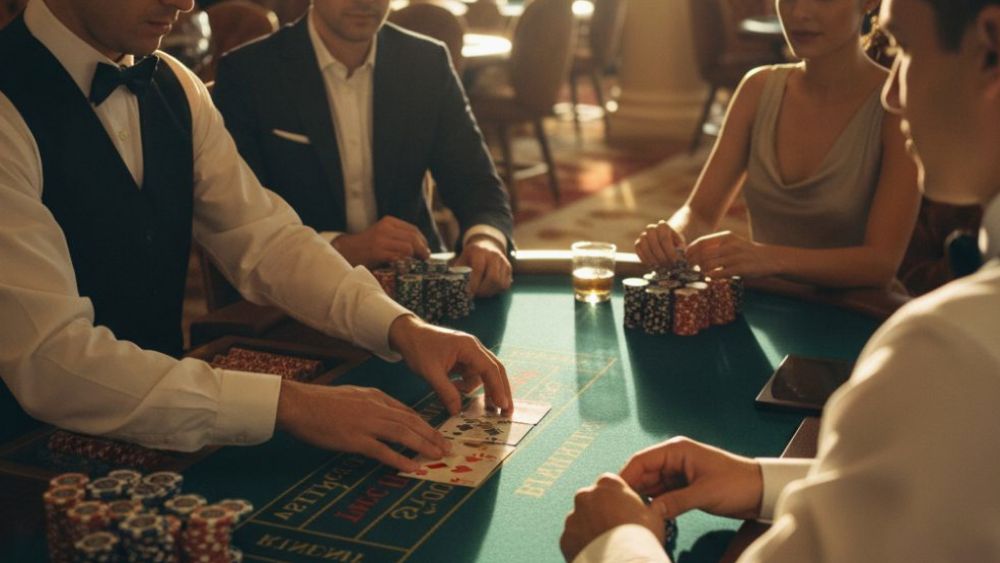
Walk into any casino floor in Entertainment City or a smaller room in Cebu and you will spot them within ten minutes. Player A pulls out a strategy card, checks it before every decision, and plays the same way whether the table minimum is ₱500 or ₱50,000. Player B waves the card away, trusts the gut, and insists that "feel" matters more than math.
Both are having fun. Only one is giving the house less money over time. This comparison is not about who is smarter or who has better instincts. It is about which approach survives the math of a game where the dealer acts last and the rules never blink.
Basic strategy is a fixed set of hit, stand, double, and split decisions based on your two cards and the dealer's upcard. It was calculated by computers running millions of hands, and it cuts the house edge to roughly 0.5% on a standard 8-deck game with favourable rules. Instinct, by contrast, is whatever feels right in the moment. Sometimes it works. Often it does not.
We are not here to scold anyone. We are here to compare the two styles side by side, using the same hands, the same dealer upcards, and the same bankroll. The results might surprise you.
The Five Hands That Separate Strategy from Instinct
Most blackjack decisions are obvious. You stand on 20, you hit on 5. The divergence happens in a handful of awkward spots where instinct screams one thing and the math says another. Here are the five hands where Filipino players most often go with their gut—and what basic strategy actually recommends.
1. 16 vs. Dealer's 10
This is the classic trap. Every fibre of your being wants to stand because busting feels terrible. Basic strategy says hit. Yes, you will bust often—about 62% of the time. But standing loses about 77% of the time because the dealer will make 17 or better more often than not. Hitting loses less. That is the only thing that matters.
2. 12 vs. Dealer's 3
Standing on 12 against a 3 feels safe. The dealer looks weak. But the dealer busts only about 37% of the time from a 3, and your 12 is not strong enough to punish them when they do not. Basic strategy says hit. It feels wrong. It is still correct.
3. Aces and 8s (Soft 18) vs. Dealer's 9, 10, or Ace
Soft 18 is a decent hand, but against a strong dealer card it is a losing hand. Basic strategy says hit. Most players stand because 18 feels respectable. Respectable does not pay the bills.
4. Pair of 8s vs. Dealer's 10
Splitting 8s against a 10 feels like throwing good money after bad. But 16 is the worst hand in blackjack. Splitting gives you two chances to build a better hand. Standing on 16 against a 10 is a slow bleed.
5. Pair of 9s vs. Dealer's 7
Standing on 18 feels right. Basic strategy says split. You are turning one strong hand into two potentially stronger hands against a dealer who is likely to bust. The math is clear, even if the table groans.
"I have seen players win big by standing on 16 against a 10. I have also seen them lose the next ten times they tried it. The math does not care about your last hand." — a pit supervisor in Pasay, paraphrased.
House Edge: The Number That Ends the Debate
Let us put the two styles on a scale. A standard 8-deck blackjack game in a Philippine casino typically offers a house edge of around 0.5% to 0.8% for a player using perfect basic strategy. The exact figure depends on the rules: whether the dealer hits soft 17, whether you can double after splitting, and how many decks are in play.
Now consider the instinctive player. Studies and simulations consistently show that players who ignore basic strategy give the house an edge of 2% to 3% or more. On a ₱1,000 average bet over 100 hands, that difference is not trivial.
- Basic strategy player: ₱1,000 × 100 hands × 0.5% = ₱500 expected loss.
- Instinct player: ₱1,000 × 100 hands × 2.5% = ₱2,500 expected loss.
That is a ₱2,000 gap over a single session. Over a year of weekly play, the instinctive player is giving away tens of thousands of pesos more—not because they are unlucky, but because their decisions are systematically worse.
What about card counting? That is a different conversation. Counting can flip the edge in your favour, but it requires discipline, bankroll, and the ability to avoid detection. Basic strategy is the foundation. Without it, counting does not work.
What About "Feel" Players Who Win?
They exist. Variance is real. A player who stands on 16 against a 10 and wins will remember it forever. The times they lost are forgotten. This is why casinos love instinctive players. The house does not need you to lose every hand. It only needs you to make enough bad decisions that the math catches up.
How to Make Basic Strategy Work for You in 2026
You do not need to memorise a 200-cell chart. You need a system. Here is how to move from instinct to strategy without turning blackjack into homework.
Use a Pocket Card (It Is Allowed)
Most Philippine casinos allow you to bring a basic strategy card to the table. It is not cheating. It is preparation. If you are unsure, ask the dealer or pit boss before you sit down. Nine times out of ten, they will not care.
Master the Hard Hands First
Hard totals (no ace) cover about 70% of your decisions. Learn these rules cold:
- 8 or less: always hit.
- 9: double against 3–6.
- 10: double against 2–9.
- 11: always double.
- 12–16: stand against 2–6, hit against 7–A.
- 17+: always stand.
Then Learn Soft Hands
Soft hands have an ace counted as 11. The key exceptions:
- Soft 13–17: double against 5–6, otherwise hit.
- Soft 18: double against 2–6, stand against 7–8, hit against 9–A.
- Soft 19+: always stand.
Split by the Book
Always split aces and 8s. Never split 10s or 5s. Split 2s, 3s, and 7s against 2–7. Split 6s against 2–6. Split 9s against 2–6 and 8–9, stand against 7, 10, and ace.
Practice Before You Play
Free blackjack apps and online demo games let you drill decisions without risking a peso. Ten minutes a day for a week will make the chart automatic. By the time you sit at a live table, you will not need to think.
And remember: basic strategy is not about winning every hand. It is about losing less over time. That is the only promise any casino game can make.
The Verdict: Strategy Wins, But Instinct Has Its Place
If you are playing for entertainment and you are comfortable with the extra cost, instinct is fine. You are not obligated to play perfectly. But if you want to stretch your bankroll, stay in sessions longer, and give yourself a real shot at walking away ahead, basic strategy is non-negotiable.
The comparison is not close. Basic strategy reduces the house edge by a factor of four or five compared to gut-feel play. It does not guarantee a win on any given night, but it changes the long-term math in your favour. In a game where the house already has an advantage, that is the only edge you can control.
So next time you sit at a table in Solaire, Okada, or a smaller room in Angeles, ask yourself: are you playing the hand, or are you playing the feeling? The players who last are the ones who know the difference.